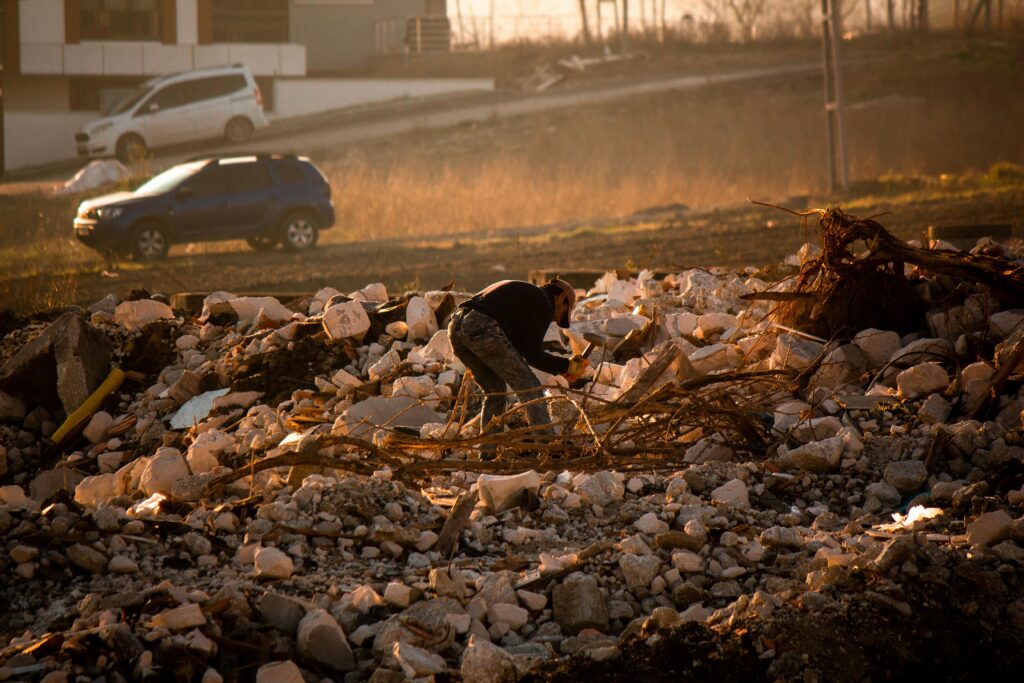
Imagine this: a leaking underground storage tank at your auto repair shop contaminates groundwater. The cleanup costs? $350,000. The fines? Another $120,000. And your standard commercial liability policy? It excludes “pollution-related damages” with the casual cruelty of a robot denying your credit card appeal. Sound far-fetched? The EPA reports over 500,000 contaminated sites in the U.S. alone—many tied to small businesses just like yours.
If you’re nodding while clutching your third coffee today, you’re in the right place. This post cuts through the jargon to explain environmental restoration insurance—what it is, who needs it, how it works, and why skipping it could be the costliest oversight you’ll ever make. You’ll learn:
- Who actually qualifies for coverage (spoiler: it’s not just oil rigs)
- Real-world claims that saved businesses from bankruptcy
- How to compare policies without drowning in fine print
- One “terrible tip” brokers won’t tell you (but should)
Table of Contents
- What Exactly Is Environmental Restoration Insurance?
- Who Needs It—and Why Most Businesses Are Underinsured
- How to Buy Environmental Restoration Insurance: A Step-by-Step Guide
- 5 Best Practices to Maximize Coverage (Without Overpaying)
- Real Case Studies: When Environmental Restoration Insurance Paid Off
- FAQs About Environmental Restoration Insurance
Key Takeaways
- Environmental restoration insurance covers cleanup costs from sudden or gradual pollution events—a gap most standard policies ignore.
- Industries like construction, agriculture, dry cleaning, and even landscaping often need it but don’t realize it.
- Policy limits typically range from $1M–$25M; deductible structures vary widely based on risk exposure.
- Pre-loss site assessments can lower premiums and speed up claim approval.
- Never rely solely on “pollution legal liability” riders—they often exclude restoration work.
What Exactly Is Environmental Restoration Insurance?
Environmental restoration insurance (also called pollution legal liability or environmental impairment liability insurance) is a specialized policy designed to cover the costs of cleaning up contamination resulting from pollutants released into soil, water, or air—whether from a sudden spill or gradual leakage over time.
Unlike general liability policies—which historically excluded “pollution” under what’s known as the “absolute pollution exclusion” clause since the 1980s—this coverage specifically addresses remediation, legal defense, third-party bodily injury, and even business interruption tied to environmental incidents.

I once reviewed a claim for a family-run nursery that unknowingly used treated wood containing arsenic. Over five years, rainwater leached toxins into a nearby creek. Their general liability insurer denied coverage outright. Thankfully, they’d added an environmental restoration rider two years prior—it covered $412,000 in soil excavation and water testing. Without it? Bankruptcy.
Who Needs It—and Why Most Businesses Are Underinsured
“I’m not Exxon—I don’t need pollution insurance.” Famous last words.
Environmental risks aren’t just for refineries. Consider these everyday scenarios:
- A contractor accidentally cracks a sewer line during excavation
- A dry cleaner’s perchloroethylene tanks corrode over time
- A farm’s fertilizer runoff contaminates a watershed
- An HVAC company improperly disposes of refrigerants
According to the Insurance Information Institute (III), over 70% of environmental claims stem from gradual pollution—not sudden disasters. Yet most small business owners assume they’re safe because “nothing dramatic happened.”
Optimist You: “My industry is low-risk!”
Grumpy You: “Says the guy whose floor drain just leaked PCBs into the stormwater system. Pass the antacids.”
How to Buy Environmental Restoration Insurance: A Step-by-Step Guide
Step 1: Assess Your Actual Exposure
Don’t guess. Conduct a Phase I Environmental Site Assessment (ESA)—a standardized review of historical records, site visits, and regulatory databases. Costs range from $2,000–$8,000 but can prevent million-dollar blind spots.
Step 2: Choose Between Claims-Made vs. Occurrence Policies
Most environmental policies are “claims-made,” meaning coverage applies only if you report the incident during the policy period—even if the pollution occurred years earlier. Occurrence-based policies (rarer and pricier) cover events that happened while the policy was active, regardless of when you file.
Step 3: Define Your Limits and Deductibles
Typical policies offer $1M–$25M in combined single limits. But don’t just pick a number. Ask: What would full remediation cost at my site? The average Superfund cleanup runs $28M—but even non-Superfund sites average $500K–$2M (EPA, 2023).
Step 4: Verify Restoration Is Explicitly Covered
Some “pollution liability” policies only cover third-party lawsuits—not actual cleanup. Insist on language that includes “remediation,” “site restoration,” and “regulatory compliance costs.”
5 Best Practices to Maximize Coverage (Without Overpaying)
- Bundle with contractors’ pollution liability if you subcontract work—gaps here cause 40% of denied claims (NAIC, 2022).
- Renew before expiration—lapses void coverage for pre-existing conditions, even if undiscovered.
- Document all safety protocols—spill kits, training logs, and containment systems can reduce premiums by 15–30%.
- Exclude non-applicable perils (e.g., asbestos if you’ve never handled it) to lower costs.
- Work with a specialist broker—general agents often lack environmental underwriting expertise.
Brutal honesty rant: Stop shopping policies based solely on premium price. I’ve seen clients save $800/year on a cheap policy… then get denied a $600K claim because the insurer lacked A.M. Best “A-” financial strength. Not chef’s kiss. More like dumpster fire.
Real Case Studies: When Environmental Restoration Insurance Paid Off
Case 1: Midwest Auto Body Shop
A cracked above-ground fuel tank leaked 800 gallons of diesel into soil over 18 months. Cleanup required soil vapor extraction and groundwater monitoring. Total cost: $217,000.
Outcome: Their $2M environmental restoration policy covered 100% after a $10K deductible. Claim processed in 45 days.
Case 2: Organic Farm Cooperative
Historical pesticide use (pre-purchase) led to soil contamination discovered during expansion permitting. State mandated remediation.
Outcome: A retroactive coverage endorsement—added during renewal—paid $389,000 in bioremediation costs. Without it? Project halted indefinitely.
FAQs About Environmental Restoration Insurance
Does homeowners insurance cover pollution cleanup?
Almost never. Standard HO-3 policies exclude contamination. Even eco-friendly upgrades like greywater systems may void coverage if improperly installed.
Can I get coverage after discovering contamination?
Rarely. Most carriers require “unknown and unintended” pollution. However, some offer “known pollution” endorsements if the site is under regulatory oversight with a cleanup plan.
How long does claims processing take?
With proper documentation: 30–90 days. Delays usually stem from incomplete site assessments or disputed liability—not insurer slowness.
Is this the same as cyber or flood insurance?
No. Environmental restoration insurance is a standalone product focused solely on pollutant releases. It complements, but doesn’t replace, other risk-management tools.
Conclusion
Environmental restoration insurance isn’t about fear-mongering—it’s about fiscal responsibility. With rising EPA enforcement (fines increased 22% from 2020–2023) and climate-driven extreme weather accelerating contaminant spread, assuming “it won’t happen to me” is a luxury few can afford.
If your business stores, uses, transports, or generates any substance that could harm soil or water—even cleaning solvents or fertilizers—it’s time to talk to a specialist. Not tomorrow. Today. Because when regulators come knocking, your bank account shouldn’t be the first thing to evaporate.
Easter egg haiku:
Soil weeps gasoline,
Insurance lifts the weight—
Clean earth, calm ledger.