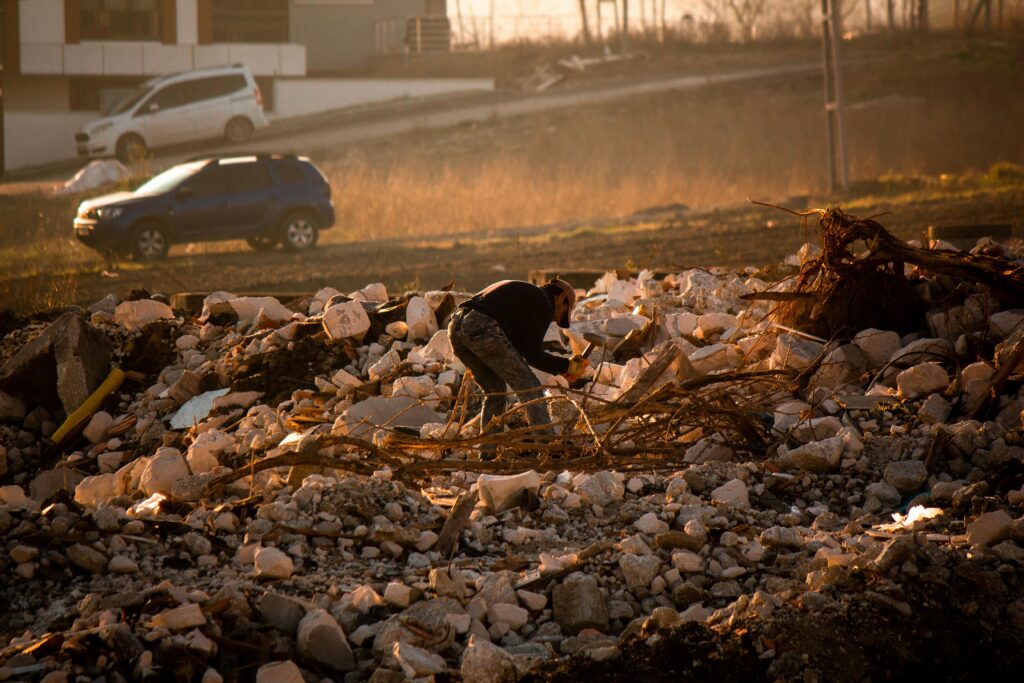
Imagine this: You buy a plot of land for a new warehouse, only to discover it’s sitting on decades of chemical runoff from a defunct auto repair shop. Suddenly, the EPA is at your door—and you’re on the hook for $500,000 in soil remediation costs. You didn’t cause the pollution… but you own the problem.
If that sends a chill down your spine, you’re not alone. Over 450,000 contaminated sites are estimated to exist across the U.S. alone, according to the Environmental Protection Agency (EPA)—and many unsuspecting property owners inherit cleanup liabilities without realizing it. That’s where site cleanup liability insurance comes in: a niche but critical policy that protects businesses from financial ruin when environmental contamination surfaces.
In this post, you’ll learn:
- Exactly what site cleanup liability insurance covers (and what it doesn’t),
- Who desperately needs it—even if they think they don’t,
- How to compare policies without getting lost in legalese,
- Real-world claims examples that show why this coverage isn’t “just for factories,”
- And the one terrible tip everyone gives about environmental insurance (spoiler: skip it).
Table of Contents
- What Is Site Cleanup Liability Insurance?
- Who Needs It—And Why Most Businesses Wait Too Long
- How to Buy the Right Policy Without Getting Played
- 5 Best Practices for Maximizing Coverage Value
- Real Case Study: A Developer Saved $380K Thanks to This Policy
- FAQs About Site Cleanup Liability Insurance
Key Takeaways
- Site cleanup liability insurance covers third-party cleanup costs for pre-existing contamination discovered after you acquire or develop property.
- It’s essential for real estate developers, contractors, lenders, and even nonprofits acquiring land with unknown histories.
- Policies vary wildly—look for “owned property” and “non-owned property” triggers, defense cost inclusion, and regulatory compliance clauses.
- A Phase I Environmental Site Assessment (ESA) is often required before underwriting—and can lower your premium.
- Waiting until after contamination is found = no coverage. Buy it before closing.
What Is Site Cleanup Liability Insurance?
Site cleanup liability insurance—sometimes called pollution legal liability (PLL) or environmental impairment liability (EIL)—is a specialized commercial insurance policy that covers the costs of investigating, remediating, and legally defending against environmental contamination that existed before you took ownership or began operations.
Unlike general liability policies (which almost always exclude pollution), this coverage kicks in when legacy issues surface—think leaking underground storage tanks, asbestos, PCBs, heavy metals, or solvent plumes from old dry cleaners. And yes, it even covers regulatory fines tied to cleanup orders under CERCLA (Superfund law) or state equivalents—if your policy includes that endorsement.

Here’s the kicker: most standard business insurance policies contain a “pollution exclusion clause” dating back to the 1970s. So if your contractor hits a buried drum while grading land? Your GL policy says, “Not my problem.” That’s why this micro-niche insurance exists—and why ignoring it is like building on quicksand.
Who Needs It—And Why Most Businesses Wait Too Long
Optimist You: “Only oil refineries and chemical plants need this!”
Grumpy You: “Ugh, fine—but only if the coffee’s extra strong and I never have to explain Superfund liability again.”
The truth? If you’re acquiring, developing, or lending against commercial or industrial property—especially brownfields—you’re at risk. Real estate developers top the list. But also:
– Nonprofits accepting donated land (yes, even for community gardens),
– Contractors working on demolition or excavation,
– Bank lenders holding collateral with uncertain environmental history,
– And even small manufacturers leasing space in older buildings.
I once worked with a boutique hotel developer who bought a charming downtown building for $1.2M—only to find lead paint and PCB-laden caulk during renovations. Their site cleanup liability policy (bought months prior) covered $210K in abatement. Without it? They’d have eaten the cost or walked away from their dream project.
Don’t wait until contamination is confirmed. By then, insurers will deny coverage—it’s considered a “known loss.” The window slams shut at acquisition.
How to Buy the Right Policy Without Getting Played
Buying site cleanup liability insurance isn’t like shopping for credit cards—you can’t just compare APRs. Policies are highly bespoke. Follow these steps:
Do You Need a Phase I ESA First?
Yes. Almost every insurer requires a Phase I Environmental Site Assessment per ASTM E1527-21 standards. This due diligence report identifies Recognized Environmental Conditions (RECs). No ESA? No quote. Bonus: a clean ESA can slash premiums by 30–50%.
Compare Trigger Types
Look for “claims-made” vs. “occurrence” forms, but more importantly:
– “Owned property” coverage: Covers cleanup on land you own.
– “Non-owned property” coverage: Covers off-site migration (e.g., contaminants leaching into a neighbor’s well).
Most policies bundle both—but confirm.
Check Defense Cost Inclusion
Legal fees can dwarf cleanup costs. Ensure defense expenses are “inside the limits” (not eating into your remediation cap) or better yet, “outside the limits.”
Negotiate the Retroactive Date
This sets how far back in time the policy covers pre-existing conditions. Push for the earliest possible date—ideally the property’s original development.
5 Best Practices for Maximizing Coverage Value
- Bundle with Transactional Coverage: Some insurers offer PLL as part of broader “transactional environmental insurance” packages during M&A deals.
- Demand Sublimits for Specific Contaminants: If your site has known solvents or metals, ask for tailored sublimits instead of generic caps.
- Review the Pollution Legal Liability Endorsement (PLLE): This extends coverage to include regulatory enforcement actions—a must-have.
- Avoid “Known Loss” Traps: Disclose all findings from your ESA upfront. Hiding RECs voids coverage.
- Renew Early: These policies often run 5–10 years. Start renewal talks 90 days out—markets tighten fast.
Real Case Study: A Developer Saved $380K Thanks to This Policy
In 2022, a mid-sized developer in Ohio acquired a former auto parts warehouse for mixed-use conversion. A Phase I ESA flagged possible petroleum hydrocarbons. They purchased a 10-year, $2M site cleanup liability policy for $18,500/year.
Six months later, soil testing revealed MTBE (a toxic gasoline additive) plume extending under a neighboring daycare. The state ordered immediate remediation. Total cost: $382,000.
Thanks to their policy—which included non-owned property coverage and defense outside limits—the insurer paid in full within 45 days. The developer kept their project timeline intact. Without insurance? Delays, lawsuits, and reputational damage would’ve been inevitable.
FAQs About Site Cleanup Liability Insurance
Is site cleanup liability insurance the same as pollution liability insurance?
Not exactly. “Pollution liability insurance” is a broad term covering operational spills (like a delivery truck leak). Site cleanup liability specifically addresses pre-existing, unknown contamination tied to real property.
Does it cover mold or lead paint?
Sometimes—but only if explicitly endorsed. Standard policies focus on hazardous substances under CERCLA (e.g., solvents, heavy metals, PCBs). Always confirm.
How much does it cost?
Premiums range from $5,000 to $50,000+ annually, based on property risk, coverage limits ($1M–$50M), and policy term (typically 5–15 years). High-risk sites (e.g., former gas stations) cost more.
Can I get it after contamination is found?
No. Insurers won’t cover “known losses.” That’s why timing—before closing—is everything.
Do residential buyers need this?
Rarely. Homeowners’ policies sometimes offer limited pollution riders, but site cleanup liability is for commercial entities. Residential risks are usually addressed via home inspection contingencies.
Conclusion
Site cleanup liability insurance isn’t flashy—but it’s the financial seatbelt you never knew you needed until you’re hurtling toward an environmental liability cliff. Whether you’re flipping brownfields or expanding your factory footprint, this coverage shields you from inherited contamination that could otherwise sink your business.
Remember:
– Buy before you close,
– Demand clarity on owned vs. non-owned coverage,
– Never skip the Phase I ESA,
– And ignore anyone who says, “It won’t happen to me.”
Because when the EPA knocks, wishing won’t cover the cleanup bill—but the right policy just might.
Like a 2004 Motorola Razr, some things seem outdated until you realize they’re quietly essential.