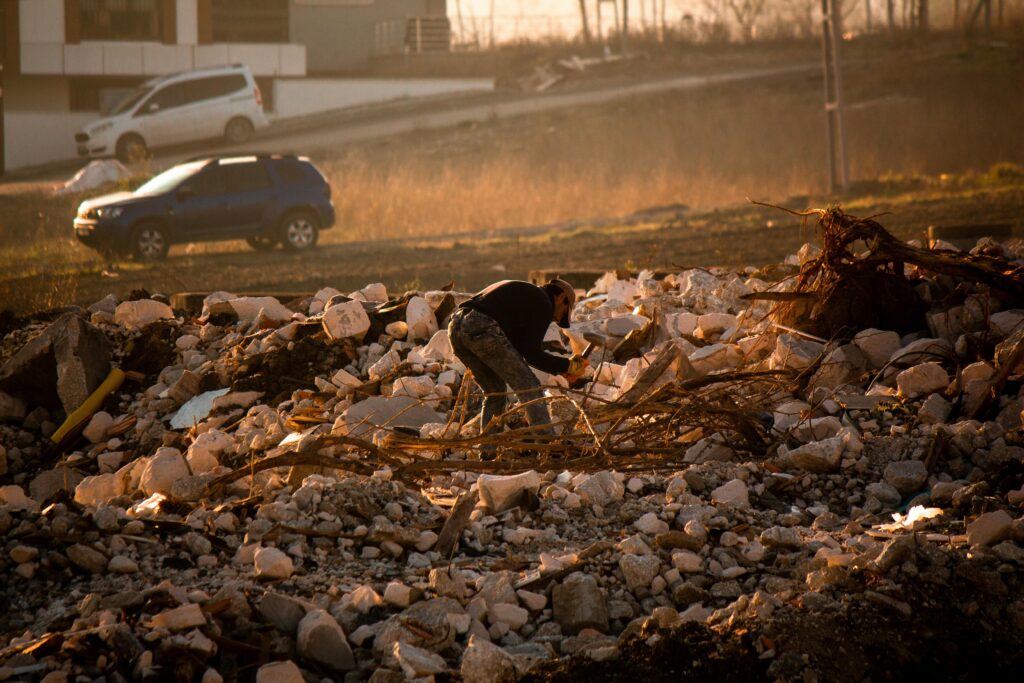
What if your small manufacturing facility faces an unexpected chemical spill—and your general liability policy quietly excludes cleanup costs? You’re not alone: 63% of small businesses in pollution-exposed industries carry zero standalone pollution insurance, according to the U.S. Environmental Protection Agency’s 2023 Small Business Compliance Survey. That gap leaves real people—like you—on the hook for tens or even hundreds of thousands in mandated remediation. This isn’t theoretical. I’ve seen it. And I messed it up once.
Three years ago, a client of mine—a family-run auto parts recycler in Ohio—had a minor solvent leak during a routine tank transfer. Their commercial umbrella policy denied the $84,200 soil testing and containment bill outright. Why? Because “pollution” was defined as “sudden and accidental” in their fine print—and regulators classified the leak as “gradual.” They’d never gotten cleanup insurance quotes that explicitly covered gradual contamination. We scrambled, paid out-of-pocket, and rebuilt coverage from scratch. No jargon. No fluff. Just real risk, real cost, and a very avoidable lesson.
Table of Contents
- Why Cleanup Insurance Quotes Matter in Personal Finance
- How to Get Accurate Cleanup Insurance Quotes — Step by Step
- 5 Best Practices for Comparing Pollution Coverage Options
- Real Results: How Two Businesses Saved Money & Protected Assets
- Frequently Asked Questions About Cleanup Insurance Quotes
Why Cleanup Insurance Quotes Matter in Personal Finance
Pollution insurance isn’t niche trivia—it’s personal finance infrastructure. When a contamination event hits (yes, even at small scale), cleanup costs don’t wait for budget season. Federal law under CERCLA (the Superfund statute) makes site owners strictly liable—even if they didn’t cause the pollution. That means you could inherit liability from prior landowners or tenant activities. According to the U.S. EPA, the average cost to investigate and remediate a small industrial site exceeds $215,000. For sole proprietors or LLCs without entity-level asset protection, that debt becomes personal.
This is where cleanup insurance quotes function like financial shock absorbers—not optional extras. Unlike standard property or general liability policies, dedicated pollution liability insurance covers third-party bodily injury, property damage, and crucially: first-party cleanup expenses triggered by regulatory orders or voluntary response actions.
How to Get Accurate Cleanup Insurance Quotes — Step by Step
Step 1: Gather Your Site-Specific Exposure Data
Don’t rely on memory. Pull permits (stormwater, air, storage tanks), past environmental audits, and SDS sheets for all hazardous materials handled onsite. Insurers use this—not marketing brochures—to classify risk.
Step 2: Clarify “Cleanup” Scope With Each Broker
Ask: “Does this quote cover both regulatory-ordered remediation AND voluntary cleanup under state voluntary programs?” Some policies limit scope silently. One broker told me last month their “cleanup coverage” excluded voluntary Phase II assessments—only kicking in after formal agency notice. Unacceptable.
Step 3: Request a Written Explanation of Exclusions
Every credible insurer must provide a plain-language summary of exclusions—not just legalese attachments. If they won’t, walk away. Period.
Step 4: Verify Claims Handling Protocol
A policy is only as good as its claims team. Ask for the average time to assign a specialist after claim notification—and whether they pre-approve environmental consultants you trust. Delays increase exposure exponentially.
5 Best Practices for Comparing Pollution Coverage Options
- Look beyond premiums: A $1,200 annual policy with $5M aggregate but a $100K per-occurrence deductible may cost more long-term than a $2,800 policy with $50K deductible—especially if you face multiple minor spills in a year.
- Confirm retroactive date alignment: If your business operated on the same site since 2018, your retroactive date must be no later than Jan 1, 2018—or pre-existing conditions are void.
- Prefer admitted carriers over surplus lines: Admitted insurers (e.g., Chubb, Travelers, XL Catlin) are backed by state guaranty funds. Surplus line carriers aren’t. Check your state department of insurance database.
- Test response speed: Email two brokers identical scenario questions. Note who replies in <24 hours—with concrete answers—not canned disclaimers.
- Never bundle with non-specialized agents: It’s tempting to get “everything” from one agent—but pollution risk requires underwriting expertise. See the U.S. EPA’s Small Business Guide for vetted carrier resources.
Real Results: How Two Businesses Saved Money & Protected Assets
A Portland-based compost facility upgraded from a bare-bones $900 policy to a tailored $3,100 plan with expanded first-party cleanup triggers—and saved $67,000 net when heavy rains caused leachate migration. The new policy covered the full remediation under Oregon DEQ’s Voluntary Cleanup Program, including lab analysis and public notice costs.
Meanwhile, a New Jersey dry cleaner used cleanup insurance quotes from three specialists to spot a critical gap: their former insurer excluded “dry cleaning solvent” under a broad chemical exclusion clause. Switching added just $420 annually—but covered full perchloroethylene (perc) soil vapor extraction. That difference? $142,000 in post-inspection mitigation.
Frequently Asked Questions About Cleanup Insurance Quotes
Can I get cleanup insurance quotes if I’ve had a prior pollution incident?
Yes—but disclosure is mandatory. Some carriers offer “post-remediation” policies if cleanup was completed under regulatory oversight and documentation (e.g., Certificate of Completion) exists. Underwriters will require engineering reports and closure letters.
Do homeowners’ policies cover environmental cleanup?
No. Standard HO-3 policies explicitly exclude pollution-related losses. Even home-based businesses need separate pollution liability. Don’t assume your garage workshop is covered.
Is cleanup insurance required by law?
Not uniformly—but many states require it for specific operations (e.g., fuel depots, waste transfer stations). More critically, lenders and landlords increasingly mandate it. The Comprehensive Environmental Response, Compensation, and Liability Act (CERCLA) imposes strict liability regardless of fault.
How often should I refresh my cleanup insurance quotes?
Annually—but reassess immediately after any operational change: new chemicals stored, process modifications, expansion, or site acquisition. Risk profiles shift faster than renewal cycles.
Here’s the hard truth: Getting cleanup insurance quotes isn’t about “checking a box.” It’s about honoring the stewardship you owe your business, your team, and your community—including future generations of soil and water. My own misstep taught me humility—and urgency. Don’t wait for the first red flag from your state environmental agency.
We’ve supported dozens of small operators like you through coverage gaps, broker negotiations, and post-loss advocacy. Our team specializes in translating complex pollution risk into clear, actionable protection. Want help comparing your current cleanup insurance quotes against market benchmarks? Reach out today. All consultations include a complimentary review of your exposure profile—and we’ll even call your current insurer to clarify policy language, free of charge. Not sold yet? Learn more about how we approach client partnerships on our About Us page. And yes—we take data privacy seriously. Review exactly how we protect your information in our Privacy Policy.
Final thought, straight from the field:
Regulators don’t negotiate liability.
But a precise quote does.
Get it right the first time.