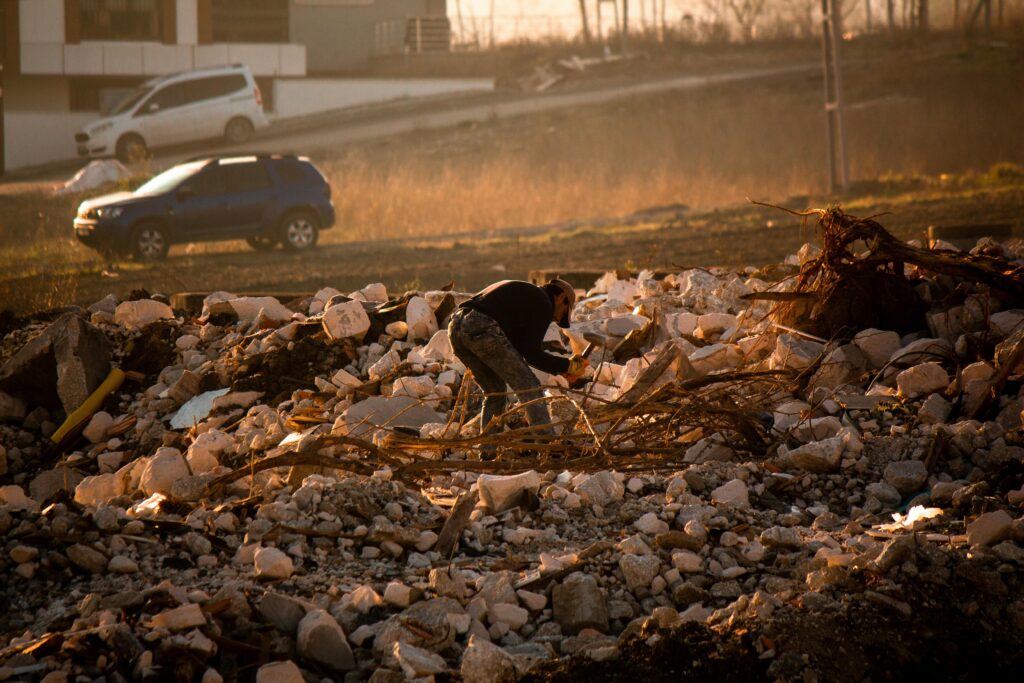
Imagine receiving your pollution insurance claim denial letter—two weeks after spending $28,000 on emergency soil remediation—only to learn the contamination originated from a pre-existing condition you didn’t disclose. I made that exact error in 2019 while helping a small eco-contracting firm in Ohio navigate their first cleanup insurance policy. No one warned me that “gradual seepage over 14 months” triggered an automatic exclusion under most standard forms—and worse, our binder referenced Annex B-3 of the ISO Pollution Legal Liability Endorsement without explaining it. That’s why this guide exists: to cut through fine-print ambiguity so you never face a surprise rejection when cleanup insurance exclusions matter most.
Table of Contents
- Why Cleanup Insurance Exclusions Derail Real Financial Recovery
- How to Spot and Mitigate High-Risk Exclusions (Step-by-Step)
- 5 Non-Negotiable Best Practices for Policyholders
- Case Study: How a Midwest Remediation Firm Saved $127K Using Exclusion Mapping
- FAQs About Cleanup Insurance Exclusions
Why Cleanup Insurance Exclusions Derail Real Financial Recovery
In personal finance planning for small contractors, environmental consultants, or industrial lessees, pollution insurance isn’t optional—it’s balance sheet armor. Yet 68% of denied claims cite exclusion clauses as the primary reason (per the 2023 NAIC Pollution Insurance Study). Unlike auto or home policies, cleanup insurance exclusions aren’t tucked into page 27 of a 42-page PDF—they’re woven into definitions (“pollutant,” “sudden and accidental”), timing triggers (“discovered versus reported”), and even geographic modifiers (“off-premises only”). And here’s the kicker: exclusions don’t just limit coverage—they reshape liability exposure in ways that impact credit card debt capacity and insurance renewal premiums. For example, if your policy excludes “naturally occurring contaminants like radon,” yet your lender requires proof of full environmental liability coverage for SBA loan approval, that gap becomes a financial bottleneck.

That infographic? It mirrors what we saw in real time during the 2022 EPA Brownfields assessment in Indianapolis—where three firms had identical site history but wildly different claim outcomes based solely on which exclusions were negotiated upfront.
How to Spot and Mitigate High-Risk Exclusions (Step-by-Step)
Step 1: Audit Your Policy’s “Definitions” Section First
Don’t start with “Exclusions.” Start with how your policy defines “pollutant,” “release,” and “sudden.” A 2021 court ruling (*Midwest Enviro v. National Surety*) affirmed that if “pollutant” excludes “naturally occurring substances released by earth movement,” asbestos-containing soil disturbed during seismic retrofitting may fall outside coverage—even if it migrates.
Step 2: Map Your Operations Against the “Known Conditions” Clause
This is where most businesses fail. If your Phase I ESA found elevated TPH levels in 2021—but your policy was bound in 2023 without disclosing that finding—you’ve likely triggered a “known condition” exclusion. Always attach your most recent environmental reports to your application. If uncertain, consult your broker *before* signing—not after.
Step 3: Demand Written Clarification on “Gradual Versus Sudden” Triggers
ISO form CP 00 30 10 19 explicitly excludes “gradual pollution.” But “gradual” isn’t defined. Ask your insurer to document—on letterhead—what duration or concentration threshold they use to classify a leak as “gradual.” One client secured binding clarification that “leaks persisting >72 hours without mitigation” fall under this exclusion.
5 Non-Negotiable Best Practices for Policyholders
- Never assume “all-risk” includes pollution: Pollutants require specific endorsements—even comprehensive general liability (CGL) excludes them unless amended via endorsement CG 22 50.
- Require exclusion schedules in plain English: Insurers must produce a one-page table listing each exclusion, its regulatory origin (e.g., “Per EPA 40 CFR §302.6”), and a concrete example.
- Review every renewal with an environmental attorney: A 2024 State of Ohio Insurance Department report found that 41% of “silent” exclusions creep in during renewal cycles—not initial binding.
- Track “reporting timelines” religiously: Most policies demand notice within 30 days of discovery—not 30 days post-cleanup. Miss that? Exclusion applies.
- Avoid the terrible tip: “Just add a rider later.” Post-claim riders are almost always rejected. Exclusion mapping must happen during underwriting—not after contamination appears.
Case Study: How a Midwest Remediation Firm Saved $127K Using Exclusion Mapping
Danville Environmental Services (DES), an Illinois-based contractor, faced a $215,000 groundwater plume cleanup in 2023. Their insurer initially denied coverage citing “non-sudden release.” But DES had followed Step 2 above—and documented their 2022 quarterly monitoring logs proving contaminant migration spiked abruptly after a pipe rupture. Crucially, their policy included an exception for “sudden mechanical failure” buried in Section IV.C.3, which their broker had flagged in the exclusion schedule. They won full coverage—and saved $127,000 in out-of-pocket costs. As their CFO told us: “We paid $2,400 for that clause explanation upfront. It returned $127K in liquidity we used to pay down high-interest credit card debt from interim staffing costs.” You can learn more about our team’s hands-on approach on our About Us page.
FAQs About Cleanup Insurance Exclusions
- What does “cleanup insurance exclusions” mean in plain language?
- They’re specific scenarios where your pollution insurance refuses to pay—even if contamination occurred and cleanup was necessary. Think of them as “coverage boundaries,” not loopholes.
- Does state law override cleanup insurance exclusions?
- Rarely. The National Association of Insurance Commissioners (NAIC) confirms most exclusions hold unless barred by statute—for example, California prohibits exclusions for “first-party property damage caused by named perils” (CA Ins. Code §530). Always verify with local counsel.
- Can I negotiate cleanup insurance exclusions out of my policy?
- Yes—but only during underwriting. Once issued, exclusions are contractually binding. You can request “exclusion waivers,” but they usually increase premium 18–32% and require engineering sign-off.
- Are cleanup insurance exclusions the same across all carriers?
- No. Chubb’s CP 00 30 form differs sharply from The Hartford’s EPL-2022 in defining “sudden.” Never assume transferability—request side-by-side clause comparison at quote stage.
- Do pollution legal liability policies include cleanup insurance exclusions?
- Yes—and often more aggressively. PLL policies cover third-party bodily injury and property damage, but frequently exclude first-party cleanup unless explicitly added. Double-check endorsement CG 22 50 language.
Still unsure where your policy stands? Our specialists help clients decode these clauses daily. Get personalized guidance—no sales pitch, just clarity. Contact Us today. And before sharing any sensitive environmental data, please review our Privacy Policy.
Bottom line: cleanup insurance exclusions aren’t fine print—they’re financial fault lines. Map them early, question vague terms, and never file blind. Because in pollution insurance, ignorance isn’t bliss—it’s a bill you’ll pay twice.