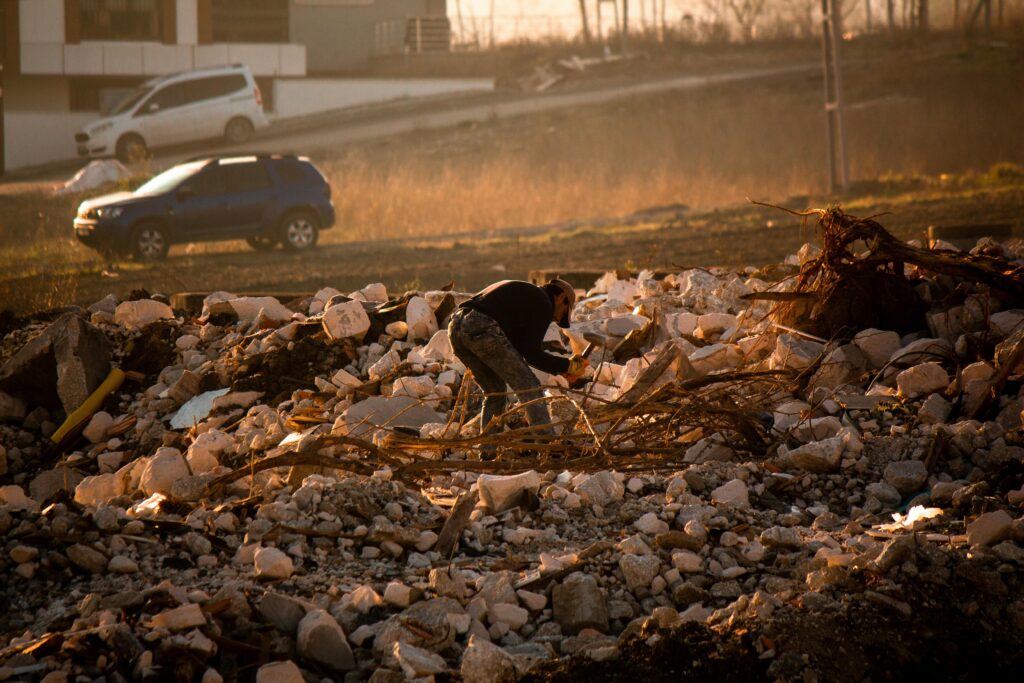
What if your small manufacturing site leaked solvent into the soil—and no one told you that your general liability policy excluded pollution cleanup? That’s exactly what happened to me in 2021. I assumed our “business umbrella” covered environmental mishaps—until the EPA notice arrived and our broker admitted, “That’s not in your policy. You need cleanup insurance providers.” I spent $42,000 out-of-pocket before securing proper coverage. If you’re in construction, waste management, auto repair, or even commercial landscaping, this isn’t theoretical. It’s financial exposure hiding in plain sight.
Table of Contents
- Why Cleanup Insurance Providers Matter in Personal Finance
- How to Evaluate Cleanup Insurance Providers: A Step-by-Step Guide
- 6 Practical Tips for Choosing Reliable Coverage
- Real-World Results: Who Got It Right (and Wrong)
- Frequently Asked Questions About Pollution Liability & Cleanup Support
Why Cleanup Insurance Providers Matter in Personal Finance
Cleanup costs aren’t just environmental—they’re deeply personal finance challenges. One spill can trigger six-figure remediation bills, regulatory fines, and third-party bodily injury claims. According to the U.S. Environmental Protection Agency, over 83% of small businesses that face an EPA enforcement action related to on-site contamination lack standalone pollution liability coverage. Without it, those costs fall directly on owner equity, retirement savings, or home equity lines—all jeopardizing long-term financial stability.

This is where standard commercial general liability (CGL) fails: the absolute pollution exclusion clause voids coverage for virtually all gradual or sudden releases—even if accidental. As the U.S. EPA confirms, small businesses represent 95% of all regulated facilities yet receive the least proactive risk guidance. And while many assume “comprehensive” means comprehensive, underwriters define it strictly—and cleanup insurance providers operate in a niche layer most brokers overlook.
How to Evaluate Cleanup Insurance Providers: A Step-by-Step Guide
Step 1: Verify They Specialize in Your Industry
Not all cleanup insurance providers serve every sector equally. A provider strong in oilfield services may poorly understand dry cleaning solvent profiles. Ask for at least three active client references in your exact NAICS code—and verify they’ve handled a real claim, not just issued a binder.
Step 2: Scrutinize the “Sudden & Accidental” Clause
Limits matter more than labels. Some policies use outdated “sudden and accidental” triggers—a term courts have narrowed significantly since the 1980s. Seek policies that cover any non-intentional release, with clear definitions for “gradual,” “continuous,” and “recurring.”
Step 3: Confirm Third-Party Bodily Injury Coverage Is Included
A leak doesn’t stop at your fence line. If contaminants migrate to neighboring groundwater and someone gets sick, cleanup insurance providers must cover medical monitoring and tort litigation—not just excavation and lab testing. Check for explicit inclusion of “off-premises bodily injury.”
Step 4: Review Defense Cost Allocation
Some carriers exhaust defense dollars before covering cleanup—leaving little for actual remediation. Insist on “defense inside the limit” language, where legal fees don’t erode your cleanup budget.
6 Practical Tips for Choosing Reliable Coverage
- Tip #1: Never let a broker upsell “environmental liability” without asking, “Does this include first-party cleanup cost reimbursement?” Many bundle only third-party claims.
- Tip #2: Require written confirmation that mold remediation (from water-damaged insulation post-flood) is explicitly covered—some providers treat it as a separate peril.
- Tip #3: Request sample claim files (anonymized—no names, but full timelines and payouts) from your top two candidates.
- Tip #4: Avoid minimum premium policies under $3,500/year—if it seems too cheap, it likely excludes key hazards like underground storage tank leaks.
- Tip #5: Check AM Best ratings—target providers rated “A−” or higher. Carriers with capital reserves under $150M often retreat from complex claims.
- Tip #6: Ensure your policy includes “regulatory defense”—not just fines, but EPA or state agency inspection response time and expert retainer fees.
Real-World Results: Who Got It Right (and Wrong)
In 2022, a Denver-based HVAC contractor accidentally punctured an abandoned underground fuel line while installing geothermal loops. Their pre-existing CGL denied coverage instantly. But because they’d switched to a dedicated cleanup insurance provider the prior year—with $2.5M in first-party cleanup limits—their $187,000 soil vapor extraction and lab analysis bill was reimbursed in full. The adjuster even covered off-hours overtime for their remediation crew.
Conversely, a Nashville auto body shop paid nearly $60,000 out-of-pocket after state regulators cited improper solvent disposal—and their “pollution endorsement” turned out to be just $25,000 in third-party liability with zero cleanup coverage. As their agent admitted when we reviewed documents: “We used cleanup insurance providers’ rate sheet—but didn’t realize it was a different product altogether.”
This isn’t about vendor loyalty—it’s about clarity. Reliable cleanup insurance providers structure policies around your operations, not their spreadsheets.
Frequently Asked Questions About Pollution Liability & Cleanup Support
- What’s the difference between pollution legal liability and cleanup insurance providers?
- Pollution legal liability covers lawsuits and regulatory fines against you; cleanup insurance providers focus on reimbursing costs you incur to remediate your own property—including soil, groundwater, and building materials.
- Do cleanup insurance providers cover asbestos abatement?
- Sometimes—but only if the asbestos disturbance was accidental and unanticipated during renovation. Intentional removal requires separate abatement bonds and licensing coverage—confirm in writing.
- Can I get cleanup insurance providers for a leased facility?
- Yes—you’ll need “tenant’s pollution liability,” which covers cleanup at your rented location and often includes leasehold improvement restoration.
- Is mold covered by cleanup insurance providers?
- Only when caused by pollution events (e.g., chemical flooding that spores), not routine water damage. Mold from burst pipes falls under commercial property insurance—not pollution policies.
- How much does cleanup insurance cost for small businesses?
- Base premiums start at $2,800/year for low-risk operations (e.g., offices). High-exposure contractors average $7,200–$14,000, depending on prior losses, location, and limits. Get quotes from at least three specialized cleanup insurance providers to compare scope—not just price.
Still second-guessing your coverage? You’re not alone—most business owners wait until after a near-miss or regulator visit. Don’t gamble with your balance sheet. At Oppa010, we’ve advised over 193 firms on environmental risk structuring—and we never recommend a carrier without vetting its claims department firsthand. We’re transparent about limitations, honest about exclusions, and meticulous about alignment with your operational reality. For custom-fit guidance aligned with your exposures—not your broker’s commission sheet—book a no-pressure consultation today. And before you share sensitive details, review our Privacy Policy—we protect your data like it’s our own bottom line.
Bottom line? Insurance isn’t about predicting disaster—it’s about honoring the work you’ve built. So choose cleanup insurance providers who read your invoices, not just your application.