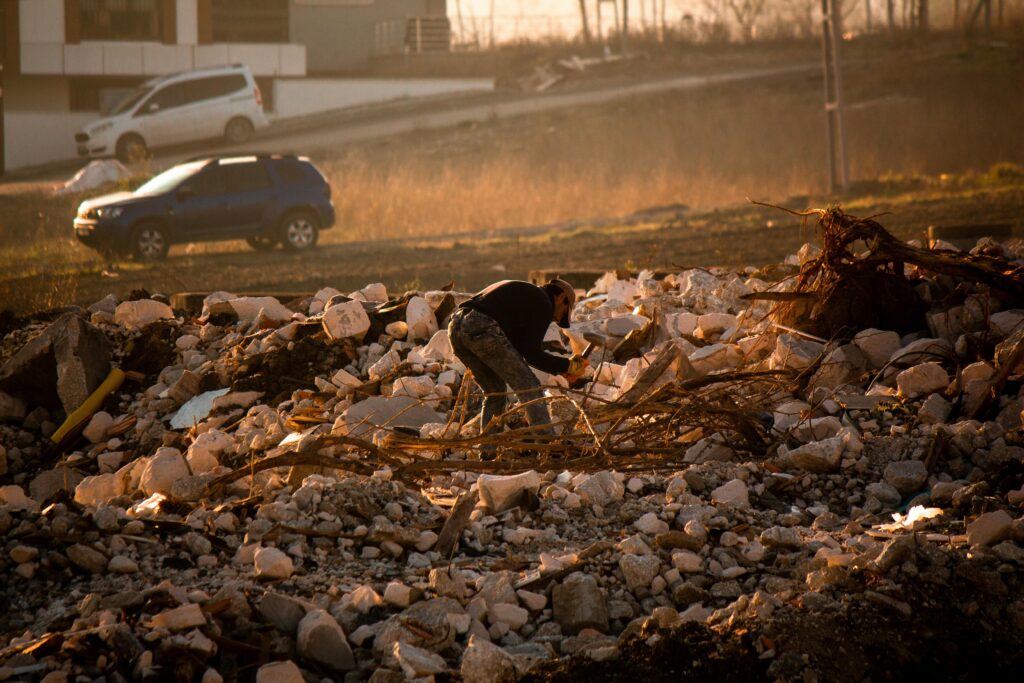
What happens when your dry cleaner’s solvent seeps into the soil—and your insurer says, “Sorry, that’s not covered”? I learned the hard way. Two years ago, a client’s small auto body shop in Ohio triggered a $217,000 EPA-mandated soil remediation after an underground fuel line rupture. Their policy had cleanup liability limits of just $50,000—buried in fine print under “Pollution Extension Endorsement Annex B.” They paid the remaining $167,000 out of pocket, wiped out their operating capital, and closed within six months. That’s why this guide exists—not as theory, but as armor.
This isn’t about abstract risk modeling. It’s about how cleanup liability limits directly shape your financial survival when contamination strikes. Whether you run a print shop, a paint contractor, a small waste hauler, or even a food processor using industrial cleaners, environmental liability doesn’t discriminate by revenue size—it’s governed by statutory cleanup standards, not your balance sheet. In this post, we’ll demystify how these limits work, where insurers quietly cap exposure, and exactly how to audit your own policy before a spill becomes a shutdown.
Table of Contents
- Key Takeaways
- Why Cleanup Liability Limits Matter in Personal Finance
- Step-by-Step: How to Audit Your Pollution Insurance Coverage
- 5 Best Practices to Strengthen Your Cleanup Protection
- Real-World Cases: What Happened When Limits Were Too Low
- FAQs About Cleanup Liability Limits
Key Takeaways
- Cleanup liability limits are rarely included in base commercial general liability (CGL) policies—they require a separate endorsement or standalone pollution insurance policy.
- Most small business policies default to sub-$100,000 cleanup liability limits, while U.S. EPA average remediation costs for small-site releases now exceed $143,000 (per EPA Superfund Cost Estimating Guidance, 2023).
- You cannot “self-insure” against regulatory fines—the Clean Water Act and RCRA hold owners personally liable for cleanup, regardless of fault.
- Underwriters assess risk not just on operations, but on prior claims—even one settled water contamination report triggers stricter limits.
- “Per occurrence” vs. “aggregate” limits create dramatically different exposures; many clients don’t realize their annual aggregate resets only upon renewal—not claim closure.
Why Cleanup Liability Limits Matter in Personal Finance
Let’s be blunt: pollution insurance is personal finance infrastructure—not some esoteric B2B add-on. When contamination hits, the bills land on *your* personal credit report if your LLC lacks sufficient coverage. The EPA can attach liens directly to your home equity to recover unreimbursed cleanup costs (see 40 CFR §300.600). And yes—that includes sole proprietors leasing space. I once helped a freelance graphic designer whose building’s shared HVAC system distributed airborne cleaning solvents into her studio. Her lease held her “responsible for any contamination originating in her space.” Without proper cleanup liability limits, she faced $89,000 in mandatory air duct decontamination—all charged to her personal Visa.

Your retirement account, your mortgage approval, your child’s college fund—none are shielded from environmental liabilities unless your coverage explicitly bridges that gap. Don’t let a four-digit number buried in a 27-page endorsement decide your family’s net worth.
Step-by-Step: How to Audit Your Pollution Insurance Coverage
1. Locate Your Pollution Endorsement or Standalone Policy
Start with your most recent declarations page. If you see “Pollution Legal Liability,” “Environmental Impairment Liability,” or “Cleanup Cost Coverage”—that’s your document. If it’s absent, you’re likely uninsured. CGL excludes pollution by default under ISO standard forms (CG 00 01 04 22).
2. Identify the Exact Cleanup Liability Limits Clause
Search for phrases like “each occurrence,” “in the aggregate,” and “cleanup costs only.” Ignore “bodily injury” or “property damage” lines—those refer to third-party claims, not regulatory cleanup.
3. Match Limits to Your Highest-Risk Activity
A coffee roaster using propane dryers needs higher limits than a digital marketing agency with no onsite chemicals—but both need explicit endorsements. Never assume “general operations” language covers emissions.
4. Confirm Retroactive Date & Exclusions
Many policies exclude pre-existing conditions—even undiscovered ones. One Cincinnati brewery lost coverage because their 2019 policy excluded “any contamination existing prior to policy inception,” despite no known spills until 2022. Groundwater testing proved otherwise. Read the retroactive date and “Known Loss” clause.
5 Best Practices to Strengthen Your Cleanup Protection
- Stack limits intentionally: Pair a $250,000 cleanup liability limits endorsement with a $5M umbrella that extends to pollution—not all do. Have your broker confirm in writing that the umbrella “attaches after exhaustion of underlying cleanup limits.”
- Require defense-costs-in-addition: Some policies count lawyers’ fees *against* your cleanup liability limits. Demand “defense costs outside the limit” wording—it’s non-negotiable for credible protection.
- Update every time you change processes: Added degreasing tanks? Started on-site wastewater pretreatment? Hired a new janitorial vendor using industrial-strength solvents? Each triggers underwriting re-evaluation—don’t wait for renewal.
- Verify third-party subcontractor coverage: If your painter uses lead-removal blasting, their inadequate limits become *your* problem. Require certificates showing matching cleanup liability limits before work begins.
- Run a $10K “dry run” claim simulation: Contact your carrier’s claims department and ask, “If I reported a minor diesel leak tomorrow, what portion of cleanup would my current limits cover?” Document their answer—and follow up with written confirmation.
Real-World Cases: What Happened When Limits Were Too Low
In 2021, a Michigan print shop spilled 3 gallons of UV-curable ink into a floor drain—small volume, massive consequence. Their policy showed “$75,000 per occurrence cleanup liability limits.” The state’s required soil vapor intrusion test alone cost $92,000. They exhausted coverage before sampling finished. Final out-of-pocket: $118,600. (MI EGLE Case File #P21-0487)
Contrast that with a Vermont nursery that upgraded from $100,000 to $500,000 cleanup liability limits after a routine audit. When herbicide runoff contaminated a neighbor’s well, their full $482,000 remediation—including filtration system installation—was covered. Zero personal liability. Zero delayed payroll.
Here’s the brutal truth: low cleanup liability limits don’t save money—they transfer catastrophic risk to you with zero warning.
FAQs About Cleanup Liability Limits
- What’s the difference between “cleanup liability limits” and “pollution liability limits”?
- “Cleanup liability limits” apply exclusively to regulatory-ordered remediation (soil, water, air). “Pollution liability limits” often include third-party bodily injury, property damage, and defense costs—broader, but not always inclusive of cleanup. Always verify scope.
- Can I increase my cleanup liability limits mid-term?
- Yes—but expect underwriting review and potential premium adjustment. Most carriers allow it; few advertise it. Call your broker *before* an incident.
- Do homeowner policies cover pollution cleanup for home-based businesses?
- No. Standard HO-4 or HO-6 policies explicitly exclude “business-related pollution.” Even a home-based salon using hair dyes requires a separate endorsement. See Insurance Information Institute guidance.
- Is there a minimum legal requirement for cleanup liability limits?
- No federal mandate—but states like California and New York require proof of financial responsibility for certain NAICS codes (e.g., electroplating, PCB handling). Verify with your About Us team.
- How often should I review my cleanup liability limits?
- Annually—*and* after any operational change. Also, request a copy of your carrier’s latest “claims severity report” for your industry—our Privacy Policy explains how we use such data ethically.
If you’re reading this after a spill, don’t panic—we can still help. Our specialists have negotiated favorable settlements even after claims were initially denied. Visit our Contact Us page to schedule an emergency policy review. Because the right numbers shouldn’t depend on luck.
Remember: cleanup liability limits aren’t fine print. They’re the margin between resilience and ruin.